The team at J.O. Agency has spent a lot of time this year talking about and considering AI in our work. It’s predicted that next year, up to 90% of online content could be AI generated. So, while it feels like an issue that’s still in the margins of certain corners of the internet, it’s actually not.
When it comes to helping clients tell their stories and reach their desired audiences, we’ve decided to put together our thoughts on how we plan to use AI technologies moving forward with our work. Before we get there, though, let’s talk about how AI intersects with marketing and advertising, as well as graphic design and writing.

While we don’t have a crystal ball, it seems clear that AI technologies are here to stay.
Quick AI Stats for 2024
- The global AI market size was valued at approximately $142.3 billion in 2023 and is projected to grow to $1.5 billion by 2030 (source)
- 90% of leading businesses have ongoing investments in AI technologies (source)
- Over 80% of online shoppers interact with AI chatbots for customer support (source)
- AI-powered digital ad spend is expected to rise to $1.3 trillion by 2032 (source)
There are so many statistics you could find on how AI intersects with marketing and advertising, but the bottom line is that AI technology is here to stay. It’s time to think about how we’ll use it in our work and what lines we want to draw with it doing the work for us.
How We Started Thinking About AI
If you’re looking for an overall helpful read about AI in the marketing and advertising field in 2024, check out this article from the Canadian Marketing Association. They make the point that AI is here to stay and has transitioned over the last year from being a trendy topic of conversation to a tactic and tool to be understood and used as support for your work. The J.O. team, after some group discussions, have landed in a similar place.
In our team discussions about AI tools, we talked about things like:
- How clients look to us for expertise and creativity—they’d likely look to us for thoughts on AI as well
- The ethics of some AI platforms using copyrighted text and images to build their library of knowledge (things made by fellow creators!)
- The ethics of sharing a client’s proprietary information with an AI platform to generation responses to a question or ideas for a graphic or language
- How, as professionals with hard-earned skills, we want to use these tools moving forward
- How to continue building trust with clients in an AI world
This last bullet point is why we decided to write a statement regarding our use of AI technologies in our work as a marketing, advertising, and public relations company. You might even call it an AI pledge.

The J.O. team has spend this year talking about how to use AI in our work.
Writing and AI at J.O. Agency
As a writer (hi, this is Caitlin typing), I can only really speak to how AI has intersected with my work of writing copy for brands. I’ve written professionally for over 10 years, but played with words my whole life and I’ll admit that all the hubbub about Chat GPT and similar platforms made me nervous last year. But then I started to tinker with it and, well, those feelings disappeared pretty quickly.
I’ve had to experiment with ChatGPT to really understand it, what it can do and what its limitations are. (And for the record, there are otherAI writing platforms — Chat GPT is just what I’ve gotten to know.) If you’re not familiar with the technology, TechTarget has a great explanation of it, but basically, you can enter any prompt into Chat GPT and it will pull from its library of information (combed from the internet) to give you an answer.
For example, here’s what it told me when I asked why jelly beans are popular at Easter.
“Jelly beans have become a classic Easter treat, and their association with the holiday has a fascinating history that blends religious symbolism, marketing, and tradition. Here’s a detailed look at why jelly beans are linked with Easter.” Chat GPT then proceeded to provide a six-point answer (with multiple points within each point). It’s pulled from various sources across the internet to answer my question.
I can ask an AI tool to write me a pep talk in the voice of Winston Churchill or to explain the Battle of Gettysburg or to suggest ideas for a tagline for a client selling balloon animals, but what the tool gives back to me is never quite right or enough. It somehow always feels a little flat and lacking nuance. What I’ve found is that often in my queries with tools like Chat GPT or brainstorming sessions with Google’s Text FX, there is one suggestion out of 10 or 15 that sparks an idea for me. In those instances, I take that kernel, spark or idea and spin it into something else.
The tools, for me, have become a brainstorming partner when I’m sitting in the office alone and staring at a blank page. It’s sometimes the first few rolls of the snowball that help create the snowman, if you will. Just how a walk in the park or a conversation with a friend may spark an idea for me, these AI tools have become another place to find pebbles of inspiration.
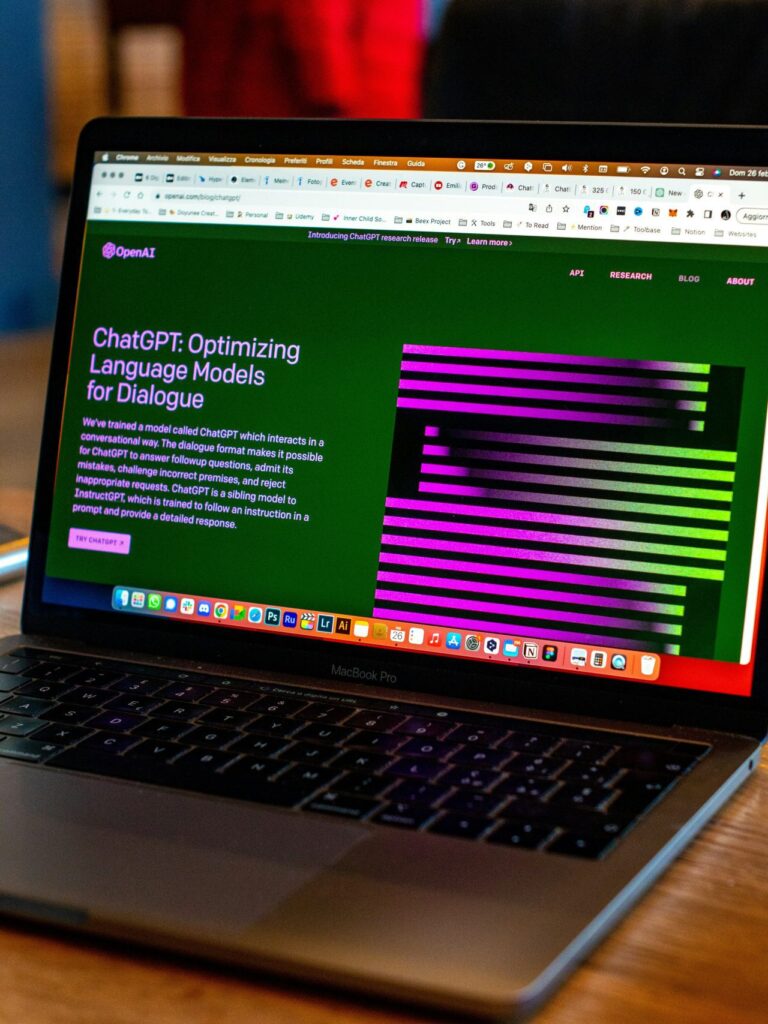
Some AI tools can be brainstorming partners for creatives who are working on their own.
Graphic Design and AI at J.O. Agency
While I’m not a graphic designer, I have listened to designer friends talk about the ethics of using an AI technology like Midjourney (you can learn more about it here and here). They’re concerned with building on the work of other artists (who are not properly compensated) to create something new. Overall, they’re devoted to the creativity that helped them build the career they have and seem interested in continuing to lean on that creativity for future work.
Why We Wanted to Create a Statement
We’ve written in the past on J.O.’s blog about major ways AI will help with the heavy lifting of data, customer engagement and targeting the right audiences. We’re excited to continue doing the work we love with the tools of the day, AI included. We decided to write an AI pledge to address any concerns people may have about how their work is being made by the J.O. team and how we plan to interact with AI platforms going forward.
So, without further ado, here’s J.O. Agency’s AI pledge:
J.O. Commits to a Future of Human Storytelling
While it’s predicted that 90% of online content may be AI-generated by 2025, the work created at J.O. Agency will not be among it. This is our promise: Our branding, public relations and advertising work will always be created by us, the humans of J.O. Agency. This doesn’t mean, however, we are burying our heads in the sand and letting technology pass us by. Different members of our team may use AI technology as a tool — to kickstart initial brainstorms, make minor edits to imagery or finesse a customer experience, for example — but we promise to never let it do our job. Our work is about connecting people to stories, and we believe this work is — and always will be — best done by humans. As we continue to grow into the future, we are committed to using our own hard-earned knowledge and passion to create authentic, compelling, people-driven work.
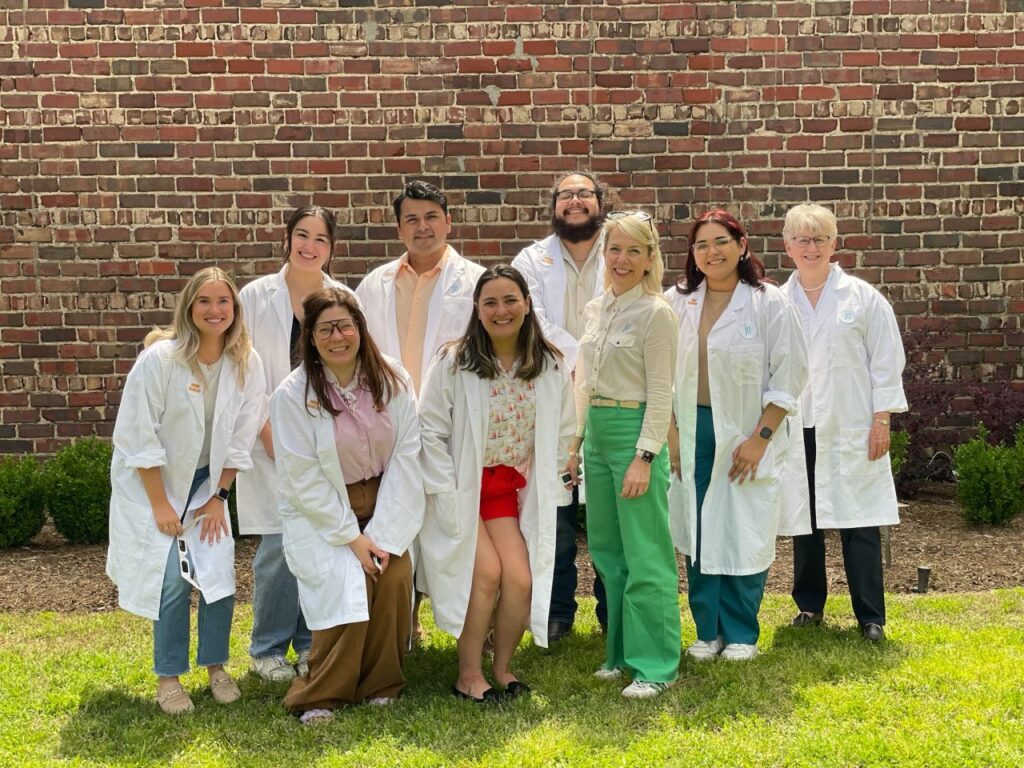
The humans of J.O. Agency, here to tell your story!
Let’s Tell Your Story in 2024 and Beyond
If you’re interested in how AI can help you reach the right audience or if you’re looking for compelling, people-driven work (public relations, graphic design, social media and beyond), talk to the humans of J.O. We’re located in Fort Worth’s South Main Village and have worked with companies for the last 26 years. Learn more about us here and then send us an email at [email protected].